

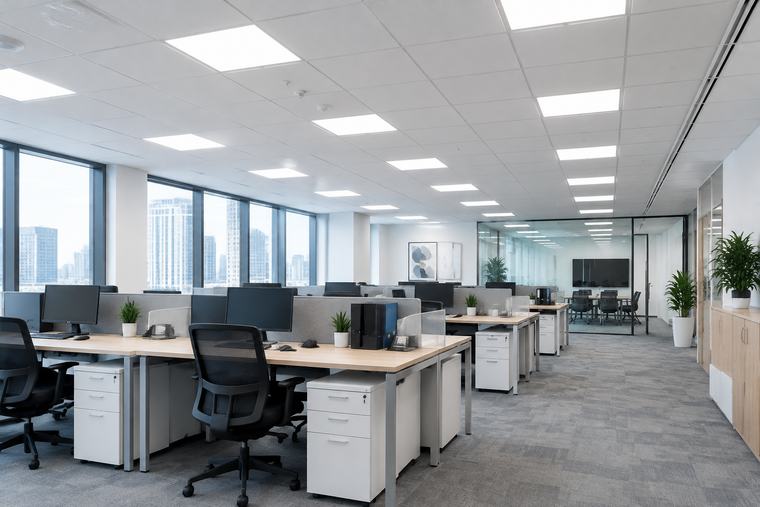
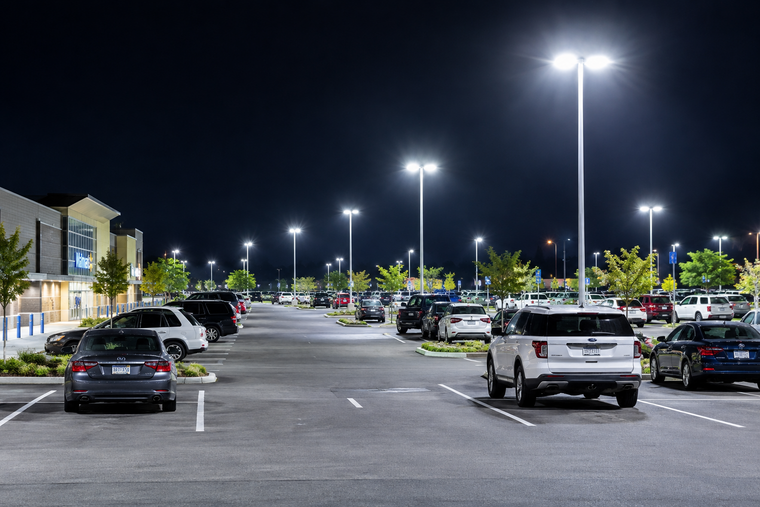

If your commercial building still runs on fluorescent or metal halide lamps, you may soon have no choice but to change. Several states have already enacted bans, and federal DOE lamp regulations are tightening. Procurement windows are closing faster than most facility teams realize.
It is already affecting what you can buy, stock, and install. If you manage or supply lighting projects, this creates a real problem. Delays, rising costs, and last-minute retrofits can quickly turn into lost time and unhappy clients. The good news is that this transition is predictable. And if planned right, it can actually reduce operating costs significantly.
Beyond LED Technology has been helping distributors and contractors across the US navigate this transition with the right retrofit products. This guide breaks down everything you need to know before 2027.
|
Key Takeaways • Fluorescent HID phase out commercial buildings face is already active in several states. • T8, T12, T5, CFL, metal halide and HPS lamps are all affected. • LED T8 tube replacement options include Type A, Type B, and Type A+B. • Corn bulbs offer a low-labor socket swap for HID fixtures. • Full fixture replacement with LED high bays is the best long-term path for high-ceiling spaces. • Plan your commercial lighting retrofit in phases — don't wait for a supply disruption. |
What Is the Fluorescent and HID Lamp Phase-Out?
The phase-out focuses on fluorescent lamps (T8, T12, T5, CFL) and HID lamps like metal halide and high-pressure sodium. They’re not being removed because they fail, but because they use more energy and contain mercury. LEDs deliver the same output with much lower energy use and no toxic materials.
According to the U.S. Department of Energy, LEDs use up to 75% less energy, and commercial buildings account for about 20% of total electricity use in the U.S.
As a result, regulations are tightening. States like California, Oregon, Vermont, Rhode Island, and Minnesota have already restricted fluorescent lamp sales, with more following.
DOE Energy Policy Act — Key Dates and Lamp Types Affected
|
Regulation / Event |
Date |
What It Covers |
|
DOE GSL efficiency rule (45 lm/W) |
Aug 2023 |
Phases out most incandescents and halogen GSLs |
|
DOE new GSL standard (120 lm/W) |
July 2028 |
Effectively phases out remaining CFLs federally |
|
California fluorescent lamp ban (LFL) |
Jan 2025 |
No new linear fluorescent lamp sales in CA |
|
Oregon LFL & CFL ban |
Jan 2025 |
Linear fluorescent and pin-base CFLs restricted |
|
Rhode Island full fluorescent ban |
Jan 2025 |
All fluorescent lamps restricted from sale |
|
Minnesota linear fluorescent ban |
2026 |
Pin-base and linear fluorescents phased out |
Sources: regencysupply.com, legalclarity.org
Fluorescent HID phase out commercial in 2027 is a common search term, but the truth is restrictions are already in effect for some lamp categories in multiple states. If facilities procurement crosses state lines, this deserves immediate attention.
Which Lamp Types Are Affected?
Not all legacy lamps are equal in terms of urgency. Here's what's actually being targeted and why.
Fluorescent Lamps (T8, T12, T5, CFL)
Fluorescent lamps are the most widely affected. This includes:
• T8 (4ft and 8ft linear tubes) — the most common in commercial drop ceilings
• T12 (older linear tubes, wider diameter) — largely phased out already
• T5 (high-output linear used in warehouses and retail)
• CFL (compact fluorescent, screw-base and pin-base) — covered by the DOE 2028 federal standard
The fluorescent lamp ban at the state level is most advanced for linear tubes. Any commercial lighting retrofit involving these should prioritize T8 replacement first, since it affects the largest installed base.
HID Lamps (Metal Halide, High-Pressure Sodium)
HID lamps are commonly used in warehouses, parking garages, canopies, and outdoor lighting. They use a lot of power, take time to turn on, and lose brightness faster than LEDs.
Metal halide and high-pressure sodium lamps are not under a strict federal ban like fluorescents. But due to energy efficiency regulations LEDs are becoming harder to use under building codes. The fluorescent HID phase out commercial in 2027 is mainly driven by compliance deadlines, reduced rebates, and limited availability of replacements.
Tip: If a facility is aiming for ENERGY STAR certification or utility rebates, removing HID lighting is often required.
How to Replace Fluorescent T8 with LED T8 Tubes
LED T8 tube replacement is the most straightforward part of this transition for most commercial spaces. The existing fixture stays in place. The lamps are swapped. But which type of LED T8 tube you use matters.
Type A vs Type B vs Type A+B Explained
|
Type |
How it works |
Best for |
|
Type A |
Works with existing fluorescent ballast — plug and play |
Quick retrofits, ballast still in good condition |
|
Type B |
Bypasses ballast — wired directly to mains power |
Long-term installs, eliminating ballast failure risk |
|
Type A+B |
Works either way — with or without ballast |
Maximum flexibility across mixed fixture inventory |
Beyond LED Technology's T8 lineup covers all three configurations. The Chinet 2nd Gen runs 10W to 22W with adjustable wattage and CCT, delivering up to 3,080 lumens. The BrightFit offers up to 125 lumens per watt at 12W–22W with ETL and DLC listing. The MR Glass Tube delivers 2,700 lumens at 18W and is UL and DLC listed. All three offer energy savings of up to 55% compared to T12 fluorescent equivalents — a straightforward win for any commercial lighting retrofit project.
How to Replace Metal Halide / HPS with LED
HID replacement tends to intimidate people because the fixture housings are often large and the wiring less familiar. But there are two clear paths, and in most cases one of them is a much simpler lift than expected.
LED Corn Bulbs for Direct Socket Replacement
A corn bulb fits straight into the existing HID socket. No rewiring, no fixture change. Just replace the bulb. That’s why it’s a popular choice for retrofit projects where labor costs matter.
Beyond LED Technology’s Cross 2nd Gen corn bulb offers adjustable wattages (80W, 100W, 120W) with up to 17,040 lumens and CCT options from 3000K to 5000K. It’s IP64 rated, UL and DLC listed, and comes with a 5-year warranty. It works well as a replacement for 250W to 400W metal halide lamps.
Full Fixture Replacement with LED High Bay or Area Light
For spaces like warehouses and distribution centers, full fixture replacement with LED high bays is a better long-term option. It removes old ballast systems, improves light distribution, and often qualifies for utility rebates that corn bulb retrofits may not.
Beyond LED Technology's UFO high bay range — including the BeyondBeam, Arcadia 4th Gen, and Tahoe — deliver up to 170 lumens per watt. Linear high bay options like the Loya 2nd Gen and Biloxi Cloud work well for aisle-style illumination in warehouses and logistics centers.
Planning Your Phase-Out Replacement: A Simple Timeline
There's no single deadline that applies to every building in every state. But here's a practical framework that works regardless of where a facility is located.
|
Phase |
Action |
|
Now (Immediate) |
Audit all fluorescent and HID lamps by type. Check your state for active fluorescent lamp ban dates. |
|
0–3 months |
Identify priority zones. Start LED T8 tube replacement in highest-use areas first. |
|
3–6 months |
Source and schedule corn bulb swaps for HID sockets in warehouses, parking, and canopy lights. |
|
6–12 months |
Plan full fixture replacements where high bays or area lights make sense long-term. |
|
Ongoing |
Track DOE lamp regulations and state-level updates. Adjust procurement accordingly. |
The DOE has confirmed that its 2028 GSL standard will require 120 lm/W efficiency — a level that CFLs cannot meet. For commercial facilities that haven't already removed CFLs, that clock is running.
Beyond LED Technology Replacement Products
Here's a quick reference for the replacement options Beyond LED Technology carries across each phase-out category:
|
Legacy Lamp |
LED Replacement Type |
BLT Product Line |
|
T8 / T12 fluorescent (4ft) |
LED T8 tube (Type A, B, or A+B) |
Chinet 2nd Gen, BrightFit, MR, Glacier 2nd Gen, Convex |
|
T5 / T8 fluorescent (8ft) |
LED T8 8ft tube |
Zell (60W, 7,800 lumens, Type B) |
|
CFL (screw or pin base) |
LED A-lamp or LED PL |
Contact BLT team for current options |
|
Metal halide / HPS (enclosed) |
LED corn bulb |
Cross 2nd Gen (80W–200W, up to 28,400 lm) |
|
Metal halide high bay |
LED UFO or linear high bay |
BeyondBeam, Arcadia 4th Gen, Loya 2nd Gen |
|
HPS area / parking lights |
LED area light or corn bulb |
Cross 2nd Gen, North Star UFO |
Frequently Asked Questions
Are T8 fluorescent lamps banned nationwide in the US?
Not fully at the federal level yet. But DOE lamp regulations are tightening, and future standards will make many CFLs non-compliant. States like California, Oregon, Rhode Island, and Minnesota have already restricted fluorescent lamp sales. Check your state rules.
What is the difference between HID phase out 2027 and the current rules?
HID phase out 2027 is a practical timeline, not a fixed federal ban. HID lamps are still allowed, but they don’t meet energy efficiency regulations LED standards and are becoming harder to source.
Can I use a Type A LED T8 tube and keep my existing fluorescent ballast?
Yes, for now. LED T8 tube replacement with Type A works with compatible ballasts. But ballasts fail over time and use extra power, so Type B or A+B is better long term.
Does a commercial lighting retrofit qualify for rebates?
Yes, in many cases. Most programs support commercial lighting retrofit projects, especially with DLC-listed LED products. Always check local utility rebates.
What's the quickest way to replace a 400W metal halide fixture?
A corn bulb swap is quickest. It fits existing sockets with no rewiring. But full fixture replacement with LED high bay gives better performance, savings, and rebate eligibility.